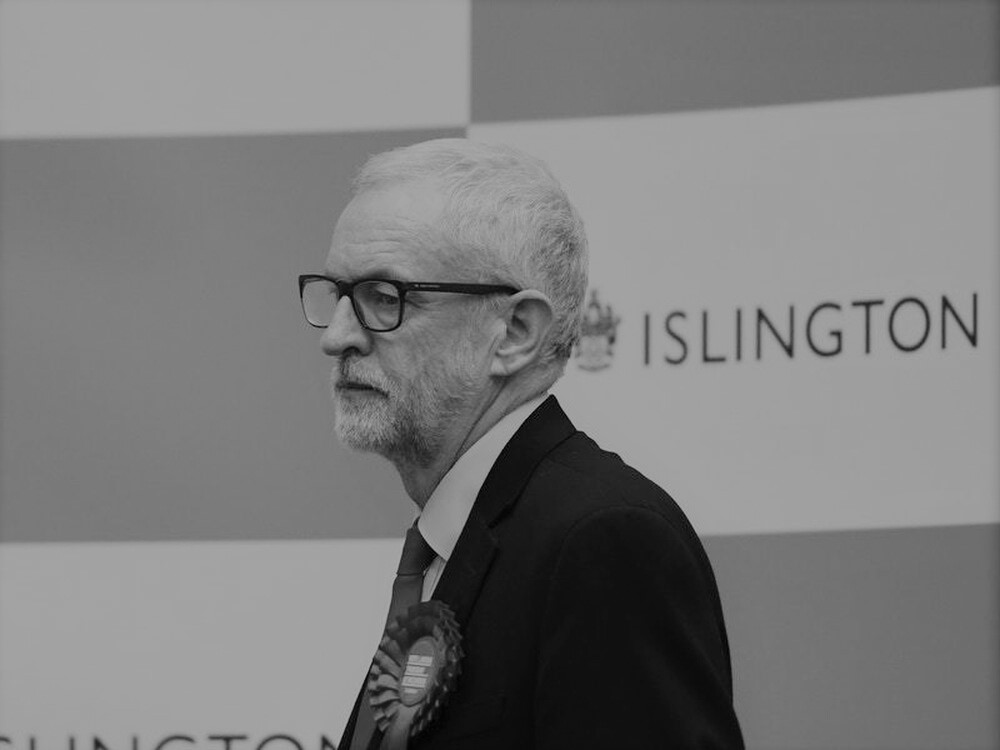
This blog takes a brief look at my initial reaction following the result of the 2019 general election. Whilst I don’t expect everyone to agree, hopefully my reaction will create a discussion from where opinions can be shared, thoughts can be evaluated and feelings can be justified. Whether this blog will be consistently updated remains to be seen, but don’t expect much. Please. I barely get my uni work done. Please.
That will go down in the history books. For years to come, young political academics will be tackling 40-mark questions that examine the root causes of Labour’s worst defeat in an election since the Thatcher days.
And let’s be clear, this isn’t about who won, this is about who lost.
Around the British Isles, we didn’t see Conservative candidates skyrocketing the ballot; many Conservative incumbents saw their majority slashed by thousands. Rarely did either party record an increase in votes, but what we did witness, however, was the capitulation of the Labour Party to a truly staggering degree. It was “Black Mirror”-esque, beyond the line of reason or expectation. There is a ubiquitous sense across the political landscape that though Labour have suffered defeats before, none have been quite like this. They have been pummelled, they have been thrashed, flogged, clobbered, overwhelmed, pulverized, demolished.
Beaten.
Defeated.
Whichever adjective you choose to describe the situation, this is more than a simple sting. The electorate have had their say, and their message is as clear as it is concise: Corbyn’s Labour is a danger to democracy, a danger to Brexit and a danger to the country. Are they right? I suppose we’ll never truly know, now. What we do know is that Corbyn’s message of hope has failed to galvanise the British people, and now a painfully lengthy review must, and you can be sure, will, take place on just where Labour go from here. For Corbyn and his driving campaign message “for the many, not the few”, the hurdles they faced were clearly a few too many.
For Boris, there is an aura of untouchability. Every blunder he made, every hit he took, it made no difference. The minister who once described the working-class man as “likely to be drunk, criminal, aimless, feckless and hopeless”, homosexual men as “tank-topped bumboys” and black men as having “watermelon smiles”, is no the chief representative of the state, and the leader of the people. It’s embarrassing typing those three quotes. It’s even more embarrassing that nobody could beat him. Nobody even gave him scare.
The aftermath
So, what happens next?
Is it adios to a free NHS, hello austerity? 70,000 more police officers and nurses? Or more cuts to public spending?
Perhaps unsurprisingly, it is hard to say.
It is likely we will experience rapid acceleration in the Brexit debate, that will now surely see parliament passing Boris Johnson’s withdrawal agreement, maybe even before Christmas. It is also likely that Boris will recall parliament in a hastily fashion in an attempt to get this done; a starkly contrasting attitude from a man who was in no rush to prorogue parliament when it suited him best. Times are different now though of course, even if it feels like only yesterday.
Which I suppose in a way, it kind of was.
Nonetheless, it now appears unlikely that anything put before parliament with a Conservative backing will be blocked, delayed, and perhaps even moderately scrutinised. This creates a window of opportunity not seen in the Houses of Parliament in recent times. With such a resounding majority, Conservative legislative makers will now be licking their top lips (if they had them lmao). For us to understand the potential repercussions of such a large majority, it is worth delving into history and evaluate previous administrations with large majorities and what they managed to achieve in their time in power.
The 1997 election saw Tony Blair’s Labour government storm to victory with a 179-seat majority; the largest ever second-term majority victory. Though “war criminal” will likely forever be etched on his forehead, Blair’s legacy is littered with an array of legislation that are still hugely relevant and/or symbolic today, perhaps most notably the introduction of the national minimum wage, but also the Civil Partnership Act 2004. The latter of the two legislative pieces was perhaps the greatest stride towards general social acceptance of the LGBT community in a generation. It is the prime example of new, radical legislation being introduced as a result of a large majority, the likes of which may never have seen the light of day under an opposition-controlled house, or even a hung parliament.
Margaret Thatcher is responsible for the most comprehensive privatisation campaign that Britain has ever witnessed, handing control of many nationalised industries to private corporations. That’s not to say that Boris will follow suit with the NHS; to painstakingly win the working class vote to then privatise additional aspects of the NHS would be seen as political suicide, so it should come as no surprise that allegations of secret meetings with Trump and his aides have been quashed as quietly as they can be.
If Boris’s government is as formidable as these aforementioned juggernauts, there is a real chance we could witness new uncompromising legislative pieces being put before parliament; one in particular piece I personally anticipate to see at some point over the next 5 years (depending on whether Priti Patel holds her place in the cabinet), would be the reintroduction of capital punishment into the judicial system.
AKA, the death penalty.
But of course, with politics, we just do not know. The electorate will be swimming in scepticism over the next few months, following 9 years of underwhelming Tory leadership. Though things look plain sailing for Boris right now, in calm waters, every ship has a good captain.
The only way up is right
We will hear over the next few days, weeks, potentially months, that this election was won based on two things: Brexit and Corbyn. Commentators will suggest that the election result is indicative of a second referendum, though this idea is highly contentious when considering Labour’s lukewarm Brexit position throughout the campaign. My personal belief, though this is written with remorse, is that Corbyn didn’t fall short of what the public expects in a credible Prime Minister: he never even left the ground.
This idea is sad, really. I’ve held the same opinion of Jeremy Corbyn ever since he was elected, though that is not for the want of trying to find a deep-rooted part of myself that could fully back a man of his ethos. He is the perfect leader of a party that does not exist. In an alternate reality, Jeremy Corbyn just won the 2019 general election as leader of the overly popular left-wing socialist party, and congratulations to him for that. Unfortunately, we are in this reality, where Jeremy Corbyn is leader of the party he has voted against 421 times. Surprise was the dominant emotion on the day of his election as party leader back in 2015, but let’s not forget that this didn’t happen by accident; Corbyn’s supporters led a ferocious campaign which saw him eventually run away with the vote. Similar to that of the Milifandom, but to a much less weird weaboo degree, the people who got Corbyn are the dictionary definition of loyalists. The grassroot Corbynist demographic, though sometimes a little heavy handed and abrasive, will surely not accept the loss as the end. They are often young, often public schooled, often students, always passionate.
But with Corbyn losing, and losing hard however, will we continue to see the fledgling loyalty towards the man, or solely his ideas? Do Corbynists want to see him as the party leader following the obliteration of the party, or do they recognise that there can be no future of a competitive Labour party with Corbyn at the helm? His legacy, though short, will surely inspire a generation of budding young politicians who will fight for the many and not for the few, whilst maybe this time not voting against the party they involve themselves with nearly half of a thousand times prior.
And maybe not attend the funeral of IRA bombers.
And maybe might find compromise between their own beliefs and that of their party’s in order to strike a balance between electability, nobility and legitimacy.
From rock-bottom, the only way is up. But to go up, they may have to slant back towards the right. Alienating long-time centralists proved pivotal in the North, but they can be recovered post Brexit, you would anticipate. Most of the electorate would most likely admit to being somewhere in the middle of the political spectrum, but who is there to represent them now? Change UK?
HAHAHAHAHAHAHAHAHAHAHAHAHA.
A cause for optimism?
They say every cloud has a silver lining. Well, it’s still a cloud nonetheless, and a big one at that. But there are positives to be taken from the election result, no matter which party you support. A record 220 women will walk into parliament following the election results, as will a record number of BAME representatives. Regarding equality and fair representation, things continue to look promising, though still way off the levels people might be expecting from one of the worlds’ most progressive societies.
You know when I started writing this blog I was fully anticipating saying “oh look at the proper good voter turnout! Up in the mid 70’s! Even the youth turnout has been above average!”.
Yeah, that hasn’t happened. Turnout appears to have gone down on the previous general election, with youth turnout expecting to decrease too. This will surely be cause for concern for those who saw the youth vote as imperative to the success of the Labour party, this when harking back to the beginning of the campaign with record numbers of young people registering to vote.
Fake news, perhaps? Or did young people just lose interest?
These are questions we’ll be answering over the course of the week. Be prepared for plenty of questions. Be prepared for plenty more politics.
 politics, answered